In this article
- Transplant and artificial fibres compared
- What a hair transplant is
- The donor area is a limited reserve
- The techniques: FUE, FUT and DHI
- Synthetic fibre implants
- Who is a candidate
- Comparing treatment quotes
- When you see the result
- Questions to ask before you book
- Frequently asked questions
- Sources
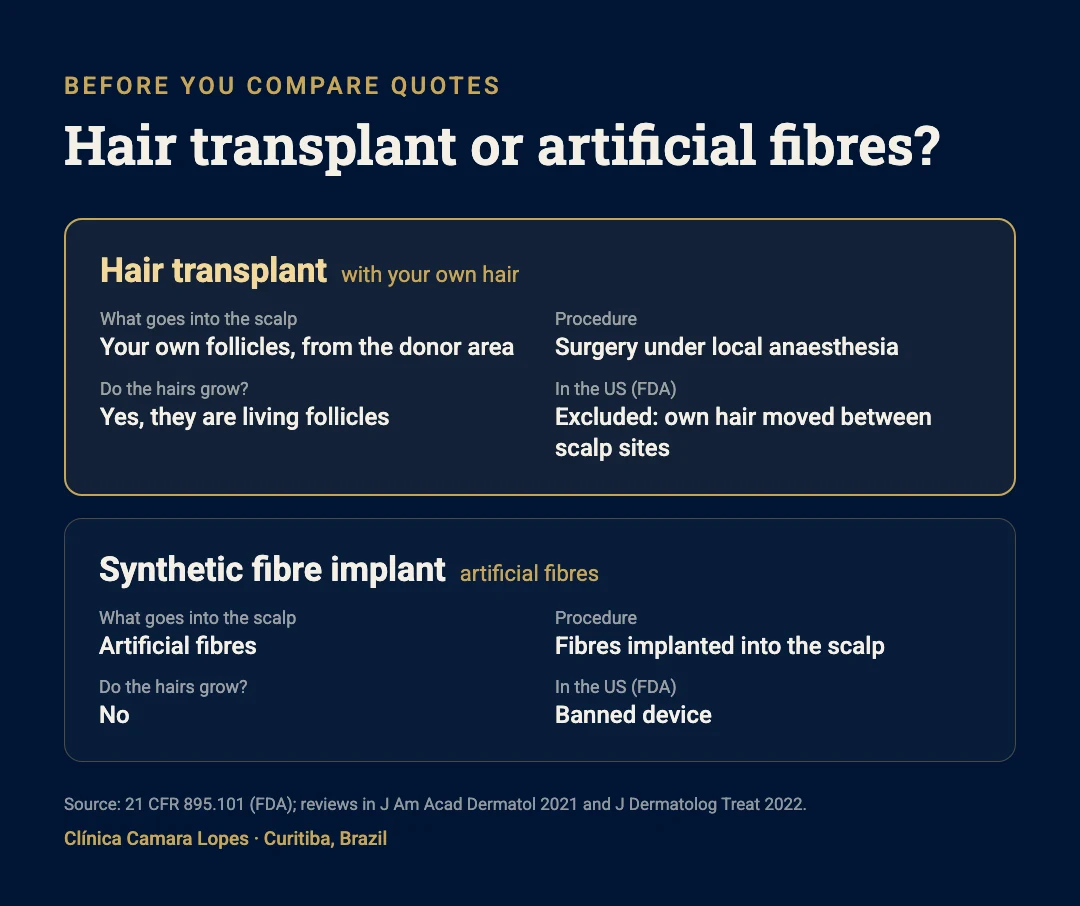
On our Brazilian website, “implante capilar” (hair implant) and “transplante capilar” (hair transplant) refer to transplantation of your own hair follicles: a doctor moves follicles from the back and sides of the head to the areas that have thinned. The word “implante” is also used for something that is not a transplant: the implantation of synthetic fibres into the scalp. US regulations classify these fibres as a banned device [5]. Below we compare the two and explain the technique names you will see in quotes.
Send us your photos and tell us your goals to request an online assessment.
Transplant and artificial fibres compared
| Hair transplant (own hair) | Synthetic fibre implant | |
|---|---|---|
| What goes into the scalp | Your own follicles, moved from the donor area | Artificial fibres |
| Procedure | Surgery under local anaesthesia [2] | Fibres are implanted into the scalp [5] |
| Do the hairs grow? | Yes, they are living follicles | No |
| Regulatory status in the US | Own hair and surrounding tissue moved between scalp sites are expressly excluded [5] | Banned device [5] |
| Main thing to ask | How the donor area will be used | What material, and what happens if the body reacts to it [6] |
Before comparing quotes, ask which procedure or product is being offered.
What a hair transplant is
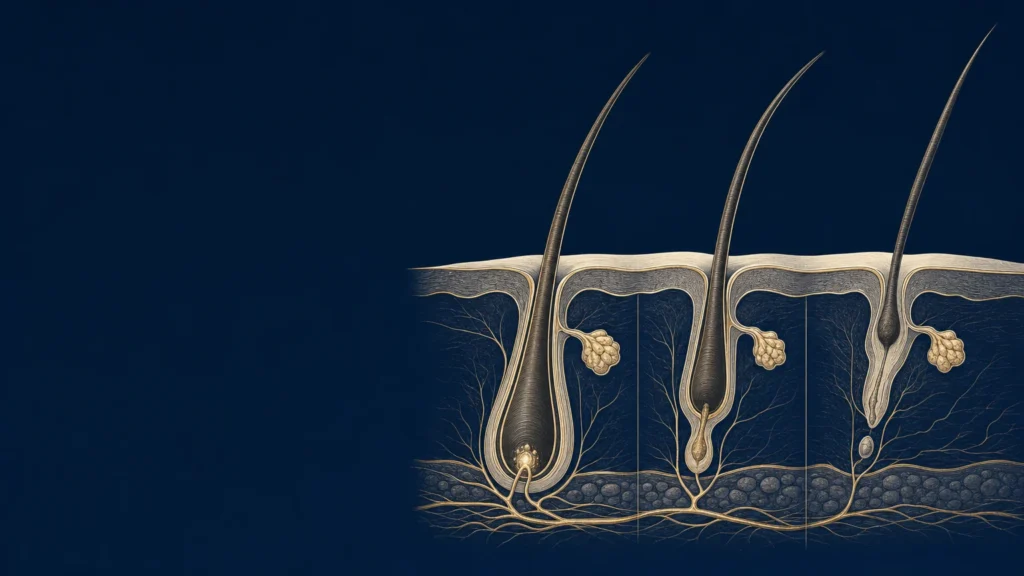
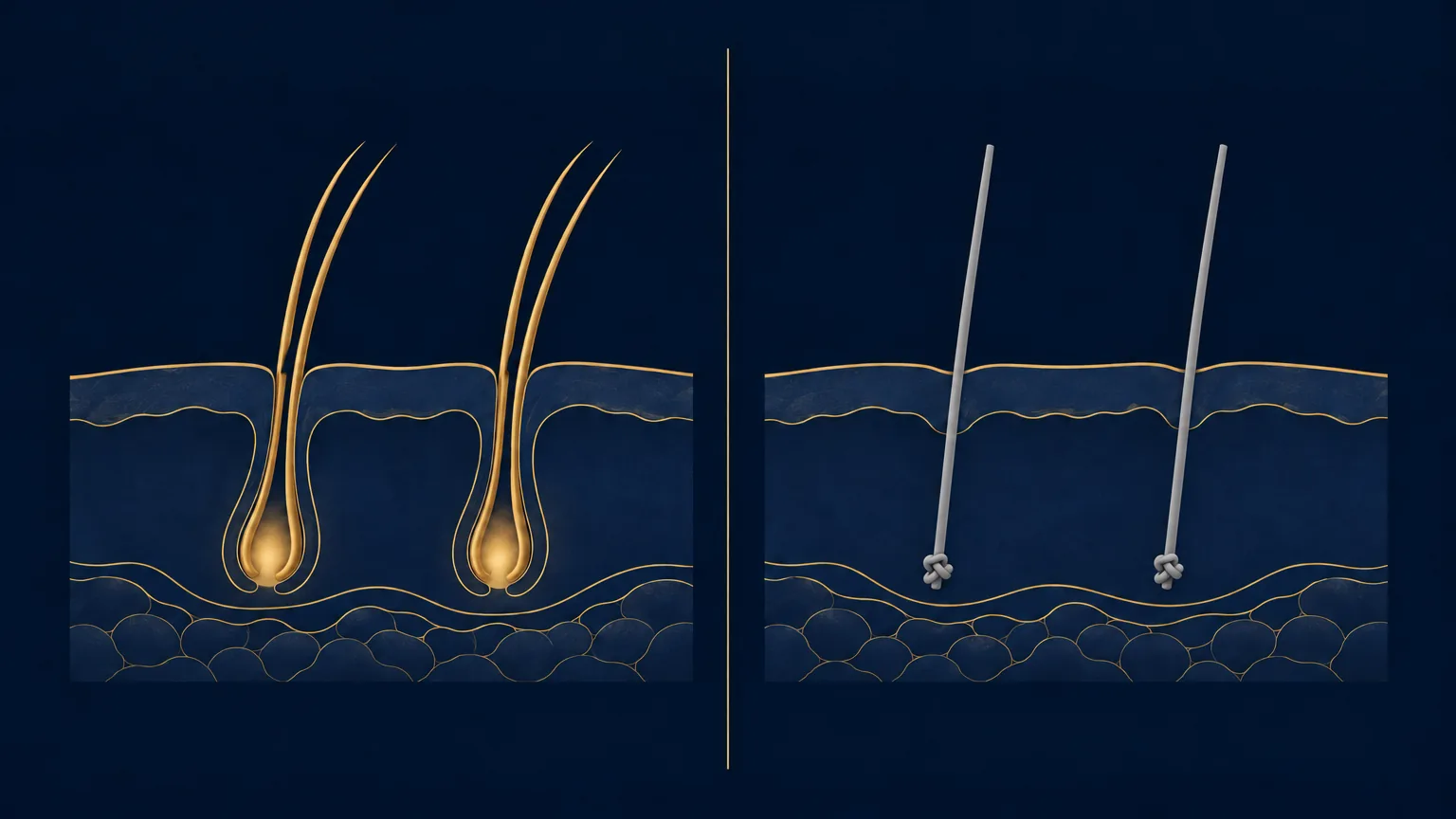
Modern hair transplantation moves follicular units, the structures used as grafts, from a donor area to a recipient area [1]. The donor area is the back and sides of the scalp, where follicles usually keep growing even in pattern baldness. The transplanted follicles are your own living tissue, so they grow and can be cut like the rest of your hair. A 2025 review explains that transplanted hair keeps its genetic characteristics in the new location, a principle called donor dominance [3].
Male androgenetic alopecia and female pattern hair loss are the most common reasons for hair-loss consultations with dermatologists [1]. Not every hair disorder is suitable for surgery, and a review in the Journal of the American Academy of Dermatology describes which scalp conditions are and which are not [1]. A hair transplant therefore starts with a diagnosis.
The donor area is a limited reserve
A 2024 study describes donor dominance and the safe donor area, the zone where hair loss does not progress, as the theoretical foundation of modern hair transplantation [10]. In practice, the safe donor area is the part of the back and sides of the head from which a surgeon takes grafts. Its size differs from person to person. The same study points out that the estimate is not tailored to each patient and that, in early stages of hair loss, the margins of this zone are assumed to stay free of future hair loss [10]. According to the authors, knowing where the zone lies helps prevent the loss of transplanted hair. They propose estimating it from measurements of each patient’s scalp; their method comes from one centre and is one approach among several.
The donor area is finite: each harvested follicle reduces the reserve that remains there. A good plan therefore weighs the coverage you want now against the reserve you may need later, especially when you are young or your hair loss is still progressing. It is worth asking how much donor reserve a plan leaves. We cover this in why the donor area is the most important part of a hair transplant.
A depleted or unsuitable donor area is also the situation in which synthetic fibre implants are sometimes offered [6].
The techniques: FUE, FUT and DHI
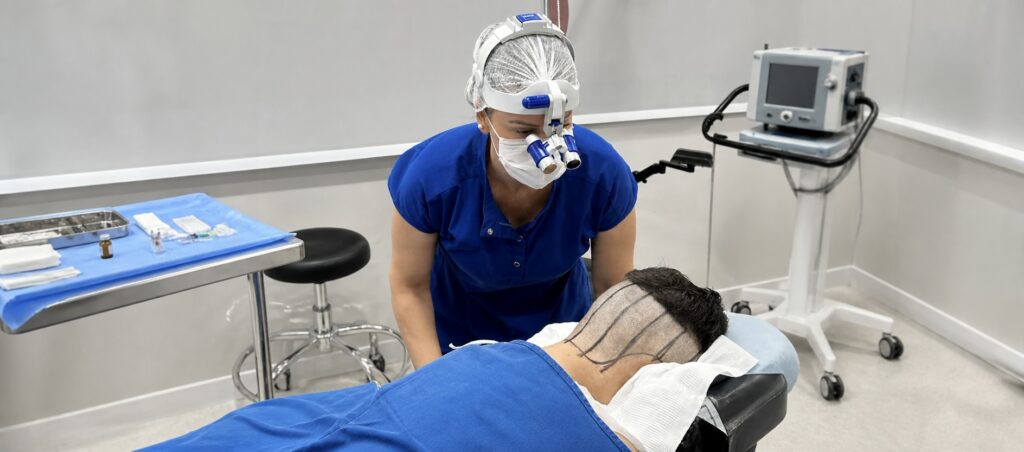
A hair transplant has two main steps: taking the grafts out of the donor area, and placing them in the recipient area. The technique names you will see refer to one step or the other.
Surgeons currently use two methods to harvest grafts [2]:
- FUT (follicular unit transplantation, also called strip harvesting): a thin strip of skin is removed from the back of the head and divided into grafts. This leaves a linear scar.
- FUE (follicular unit excision): each follicular unit is removed individually with a small circular punch. This avoids the linear scar, although FUE still leaves scars. A 2024 article on ethical issues in FUE calls “scarless surgery” a false statement [8].
A 2025 review describes both FUE and strip harvesting as state-of-the-art methods [3].
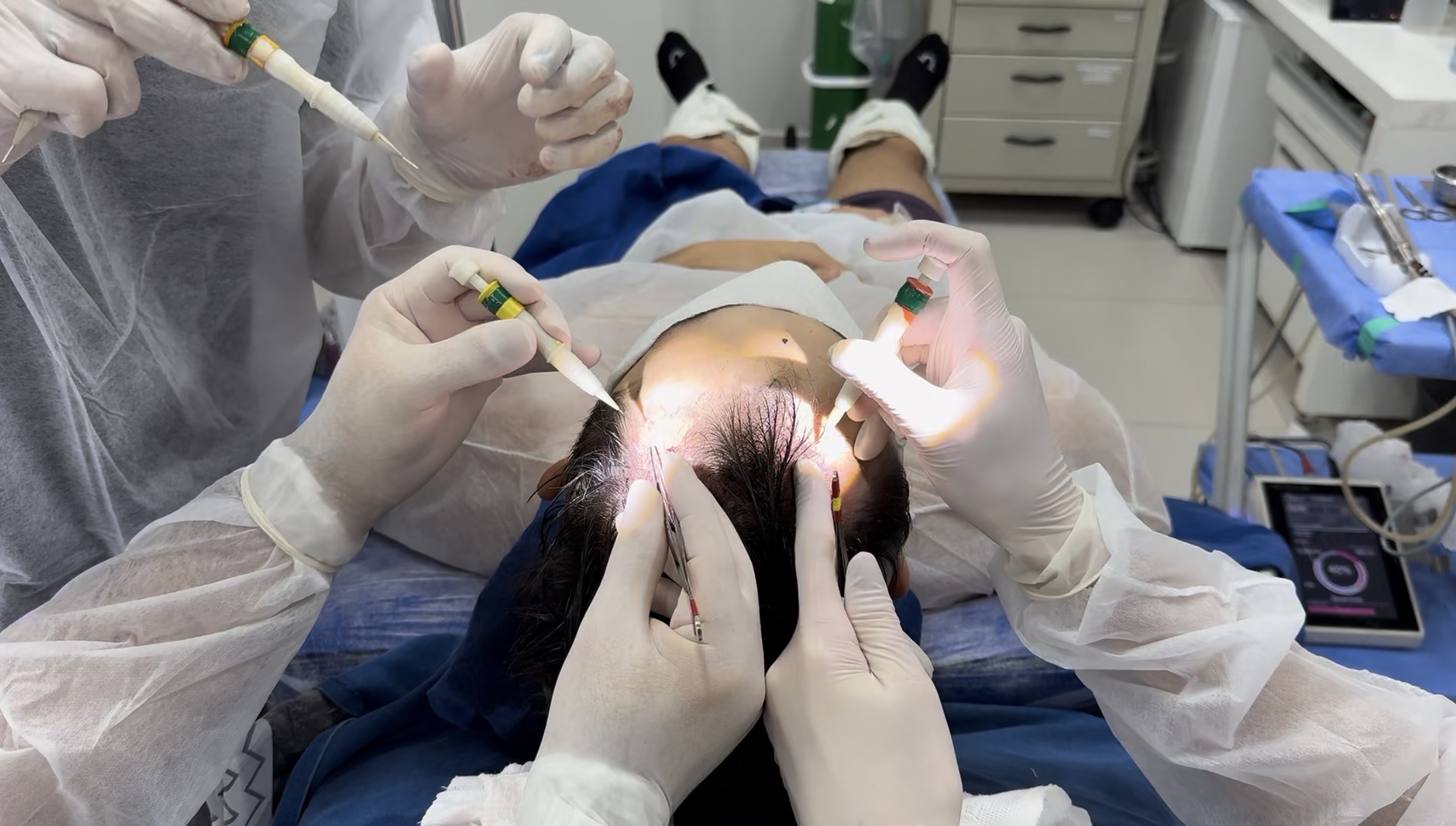
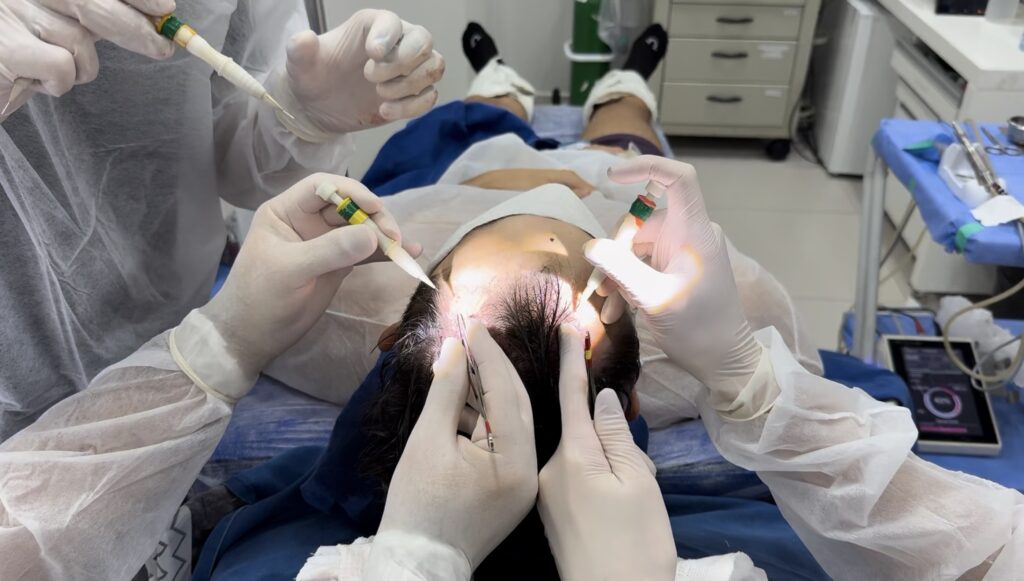
To place the grafts, surgeons use premade sites (holes opened first, grafts placed afterwards with forceps), “stick-and-place”, or tools such as implanters [2]. A sharp-needle implanter can create the recipient site and place a follicular unit in one step; other implanters and inserters are also used [4]. Forceps allow safe placement in well-trained teams [4]. Our clinic uses DHI (direct hair implantation) to describe placement with implanter pens. We compare the two in more detail in DHI or FUE: what actually differs.
At Clínica Camara Lopes we harvest only with FUE and place the grafts with implanters. If the scalp alone does not have enough donor hair, body hair such as beard or chest hair can be added, and that is still your own hair. You can read more on our FUE hair transplant page.
Synthetic fibre implants
Synthetic fibre implantation places artificial fibres into the scalp to imitate hair. It is sometimes offered when the donor area is depleted or unsuitable for a transplant [6]. Since 1983, US federal regulations have listed “prosthetic hair fibers” as a banned device. The same rule states that natural hair transplants, in which a person’s own hair is moved from one area of the scalp to another, are excluded from the ban [5]. This is the US rule; this article does not cover how these fibres are regulated in Brazil or in other countries.
A 2022 review of artificial hair implantation rated most of the clinical studies as poor to fair in quality, because they lacked randomisation and control groups. It also noted that physicians remain sceptical because of the complications reported [6]. A 2026 review describes a seventh published case of squamous cell carcinoma at a previous synthetic-hair implantation site and discusses chronic foreign-body reactions [7]. These case reports cannot establish how frequently this occurs or whether the implants caused the cancer.
A retrospective study of 1,518 patients who received Biofibre® artificial hair implants, published in 2019, describes immediate, visible results without scarring or hospital stay, according to its authors [11]. The 2022 review describes newer fibres such as Biofibre® and Nido Z-type as biocompatible, and it concludes that further high-quality research is needed to establish the safety and efficacy of artificial hair implantation [6]. In 2020, a clinical team in Denmark published two case reports of side effects after artificial hair implants [12].
If you are offered an “implante capilar”, ask what material is being implanted and whether it is your own hair.
Who is a candidate
Whether a transplant makes sense is decided in a medical assessment. At our clinic, the medical team evaluates the pattern of hair loss, donor density, hair calibre, the condition of the scalp, previous surgeries, medication history, expectations and long-term progression (see our safety and medical standards).
Most hair transplants treat androgenetic alopecia. A 2025 review also lists end-stage scarring (cicatricial) alopecia and corrective procedures after trauma or surgery among its uses [3]. Whether that applies to your scalp is decided at the examination.
The hair that was not transplanted can keep thinning, and a 2025 review counts concurrent medical treatment among the factors that have improved results [3]. If you are unsure about the cause of your hair loss, start with our guide on male pattern baldness, its stages and treatments. For the cases in which surgery is not the answer, read when a hair transplant is not the right choice.
Comparing treatment quotes
Check first whether a quote covers transplantation of your own follicles or artificial fibres. Then compare the same thing: the same harvesting method and the same number of grafts. For our clinic’s price reference and the factors affecting an individual quote, see our hair transplant cost page.
Ask the clinic to state in writing whether the proposal involves your own follicles or artificial fibres. For a transplant using your own hair, ask which harvesting method will be used, how the grafts will be placed and how many grafts are planned. If the proposal mentions fibres, synthetic or artificial hair, or a fibre brand, ask exactly what material would be implanted.
When you see the result
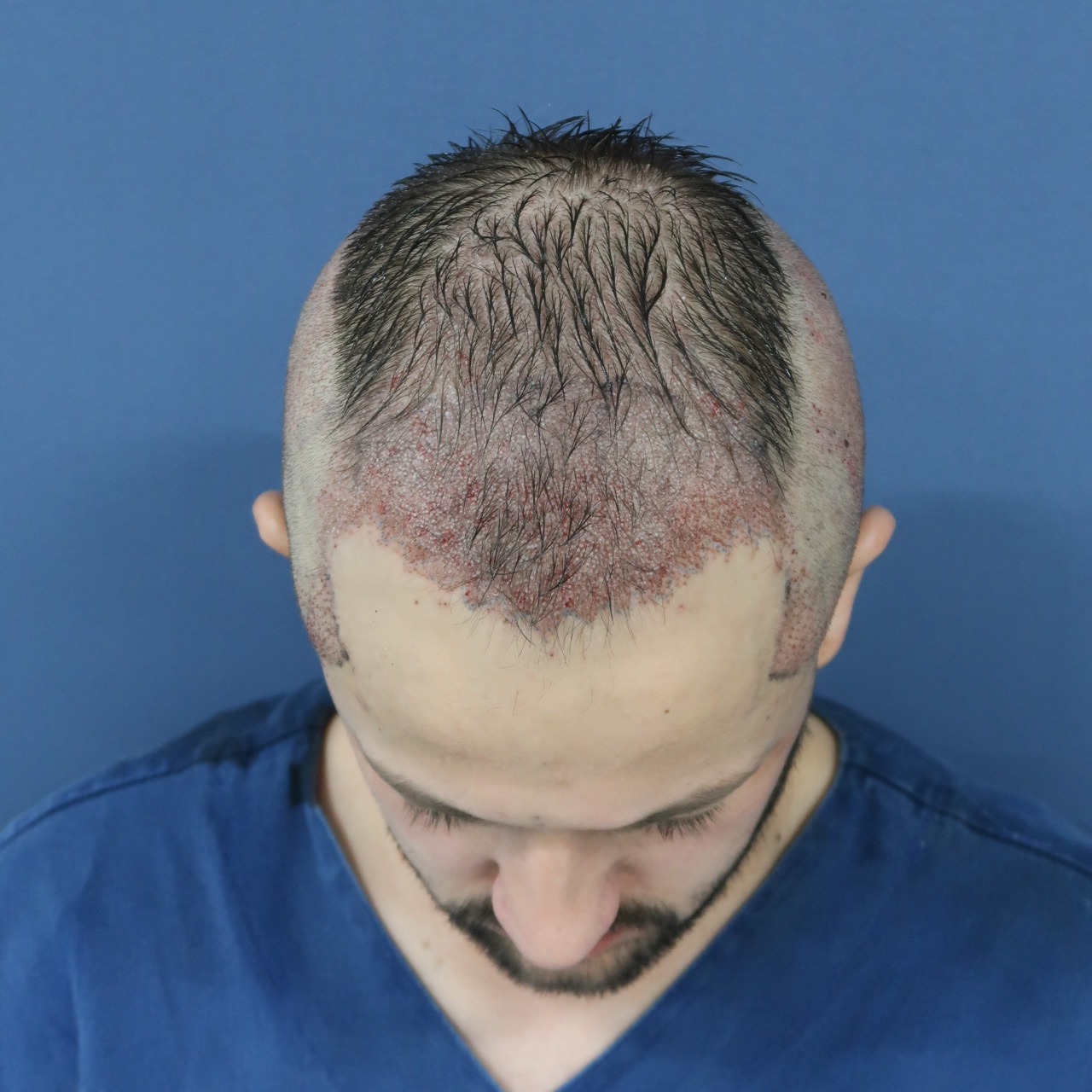
A transplant does not give immediate hair. Many transplanted hairs shed in the first weeks, and new growth appears gradually over the following months. In a 2001 study of 11 men whose grafts were placed with an implanter device (the KNU implanter), about half of the transplanted hairs had fallen out after one month, and survival estimates based on hair counts in marked areas were 92.0% at six months and 90.4% at twelve months [9]. Our article on what to expect after a hair transplant goes through healing, shedding and growth step by step.
How natural the result looks also depends on planning. A 2025 review credits thoughtful hairline design and concurrent medical treatment with improving the aesthetic results of hair transplantation [3].
Questions to ask before you book
- Is this a transplant of my own hair, and from where will the grafts be taken?
- Which harvesting method will you use, FUE or strip, and how will the grafts be placed?
- How many grafts does the plan need, and how much donor reserve will be left for the future?
- Which steps does the doctor perform, and which steps does the team perform?
- What does the price include, and is it per graft or for a package?
- Can I see results from patients with hair loss similar to mine? You can browse our patient results.
For more on judging a clinic, see how to choose a hair transplant clinic without being misled by marketing.
In short: on our website, “implante capilar” and “transplante capilar” both mean surgery with your own follicles. A synthetic fibre implant is a different procedure. The fibres are a banned device in the US [5], and a 2022 review rated most of the clinical studies on them as poor to fair in quality [6]. Before you compare quotes, get it in writing which of the two is being offered.
Comparing two offers that use different labels? Send us your photos and the proposals you have, and we will explain what each one actually involves.
Frequently asked questions
Are hair implant and hair transplant the same thing?
On our website, yes: “implante capilar” and “transplante capilar” both describe moving your own follicles from the donor area to the thinning areas. The word “implante” can also refer to synthetic fibre implants, which are a different procedure [5][6].
Does transplanted hair grow?
Yes. The transplanted follicles are living tissue. Many of the hairs shed in the first weeks, and new hair grows from the follicles over the following months [9].
Is a hair transplant permanent?
The transplanted follicles are taken from the donor area, where hair usually keeps growing in pattern baldness, and they keep their genetic characteristics in the new location, a principle known as donor dominance [3]. The hair around them that was not transplanted can still thin over time. A 2025 review counts concurrent medical treatment among the factors that have improved the aesthetic results of hair transplantation [3].
Will scars show if I wear my hair very short after a hair transplant?
FUE avoids the linear scar of the strip method, but it still leaves scars. A 2024 article on ethical issues in FUE calls “scarless surgery” a false statement [8]. Ask your surgeon how the donor area is likely to look with very short hair in your case.
How much donor hair do I have?
That is assessed at the examination. The size of the stable donor zone varies between people. A 2024 study notes that the estimate is not tailored to each patient and that, in early stages of hair loss, the margins of the zone are assumed to stay free of future loss [10]. Ask your surgeon how many grafts your donor area can provide over time and how many the current plan uses.
Can a hair transplant cover a scar?
A 2025 review lists corrective procedures after trauma or surgery and end-stage scarring alopecia among the uses of hair transplantation [3]. Whether it can work for your scar is decided at the examination.
Which term do people in Brazil search for more?
In the DataForSEO query retrieved on 5 September 2026 for Brazil in Portuguese, estimated monthly search volume was 27,100 for “implante capilar” and 22,200 for “transplante capilar”. On our website both terms describe transplantation of your own follicles.
Does a hair implant hurt?
A hair transplant is done under local anaesthesia, and surgeons use techniques to reduce the pain of the injections [2]. Ask your surgeon what discomfort to expect and how it will be managed.
Are synthetic hair implants safe?
In the United States they are banned as a device [5]; this article does not cover the rules of other countries. A review rated most studies on them as poor to fair in quality and reported physician scepticism because of complications [6]. A 2026 review describes a seventh published case of skin cancer at a previous implantation site; such case reports cannot show how often this happens or whether the implants caused it [7]. Our FUE page describes transplantation using your own hair follicles.
Can women have a hair implant?
Yes, when the cause of the hair loss is suitable for surgery and there is enough donor hair. Female pattern hair loss is one of the most common reasons for hair-loss consultations with dermatologists [1]. See our page on female hair transplant.
Sources
- Jimenez F, Alam M, Vogel JE, Avram M. Hair transplantation: Basic overview. J Am Acad Dermatol, 2021. PMID 33905785. DOI 10.1016/j.jaad.2021.03.124. https://pubmed.ncbi.nlm.nih.gov/33905785/
- Jimenez F, Vogel JE, Avram M. CME article Part II. Hair transplantation: Surgical technique. J Am Acad Dermatol, 2021. PMID 33915242. DOI 10.1016/j.jaad.2021.04.063. https://pubmed.ncbi.nlm.nih.gov/33915242/
- Queen D, Avram MR. Hair Transplantation: State of the Art. Dermatol Surg, 2025. PMID 40354670. DOI 10.1097/DSS.0000000000004675. https://pubmed.ncbi.nlm.nih.gov/40354670/
- Speranzini M, Souza SEG. Advancements in Graft Placement Techniques. Facial Plast Surg, 2024. PMID 37879353. DOI 10.1055/a-2198-2782. https://pubmed.ncbi.nlm.nih.gov/37879353/
- US Code of Federal Regulations, 21 CFR 895.101, Prosthetic hair fibers (Part 895, Banned Devices; 48 FR 25136, June 3, 1983). https://www.ecfr.gov/current/title-21/chapter-I/subchapter-H/part-895/subpart-B/section-895.101
- Gupta AK, Venkataraman M, Quinlan EM. Artificial hair implantation for hair restoration. J Dermatolog Treat, 2022. PMID 33565339. DOI 10.1080/09546634.2021.1887442. https://pubmed.ncbi.nlm.nih.gov/33565339/
- Brambilla L, Mantovani M, Pajardi GE, Di Cristofori A, Marchesi A. Squamous Cell Carcinoma of the Scalp Following Synthetic Hair Implantation: A Structured Narrative Review and the Seventh Case Reported in Literature. Cureus, 2026. PMID 42137705. DOI 10.7759/cureus.106938. https://pubmed.ncbi.nlm.nih.gov/42137705/
- Rose PT. Ethical Considerations in Follicular Unit Excision Surgical Procedures. Facial Plast Surg, 2024. PMID 37944997. DOI 10.1055/a-2207-3413. https://pubmed.ncbi.nlm.nih.gov/37944997/
- Lee SJ, et al. Evaluation of survival rate after follicular unit transplantation using the KNU implanter. Dermatol Surg, 2001. PMID 11493294. DOI 10.1046/j.1524-4725.2001.01029.x. https://pubmed.ncbi.nlm.nih.gov/11493294/
- Punia S, Goel A, Gupta A. Patient-Based Ratio Method for Permanent Zone Donor Area Calculation in Hair Transplant. Indian J Plast Surg, 2024. PMID 39734366. DOI 10.1055/s-0044-1787655. https://pubmed.ncbi.nlm.nih.gov/39734366/
- Satolli F, Rovesti M, Bogdan Moran AB, et al. Biofibre® artificial hair implant: Retrospective study on 1,518 patients with alopecia and present role in hair surgery. Dermatol Ther, 2019. PMID 31168904. DOI 10.1111/dth.12985. https://pubmed.ncbi.nlm.nih.gov/31168904/
- Näslund-Koch C, Thyssen JP, Zachariae C, Nielsen SL, Skov L. Side effects after artificial hair implants: 2 case reports. JAAD Case Rep, 2020. PMID 32715067. DOI 10.1016/j.jdcr.2020.06.004. https://pubmed.ncbi.nlm.nih.gov/32715067/
Medical disclaimer: this article is general information and does not replace a medical consultation. Treatment decisions are made with a doctor after an examination. See our medical disclaimer.