
- Beard & Body Hair Transplant
- Two Services. One Surgeon.
Beard and Body Hair Transplant in Brazil
- 0.85mm punches
- 4,000-7,000 donor units
- 5,000+ Procedures
- 21+ Years
Live Procedure
Beard transplant + BHT
FUE 0.85mm beard / 0.6-0.7mm body
Pick your direction
Two related but distinct procedures
Direction 01
Beard Transplant
Restore or enhance your facial hair. Full beard creation, density fill, sideburn or mustache restoration, scar camouflage.
Direction 02
Body Hair Transplant (BHT)
Use beard, chest or back hair as a donor source for scalp restoration when your scalp donor supply is limited.
Direction 01 · Beard Transplant
Beard transplantation — facial hair restoration and density enhancement
Use genuine beard hair or scalp follicles to build, fill, or repair facial hair. On average 4,000 to 7,000 follicular units are available for beard work, and Dr. Sergio’s ultra-fine 0.85 mm punches keep the donor area beneath the chin free of visible scarring.
Live procedure
How the procedure works
Beard hair from beneath the chin, placed at natural facial-hair angles
For most beard transplants, Dr. Sergio uses hair from the area beneath the chin, selected for its hair density, follicle diameter, and the benefit of avoiding visible scarring. When that donor supply is insufficient, scalp follicles from the occipital donor zone can supplement.
Since scalp hair typically has a finer texture and smaller diameter compared to beard hair, achieving a dense and natural-looking beard using scalp grafts may require a higher number of follicles. Dr. Sergio plans the graft mix to match your facial hair characteristics as closely as possible.
Important: once follicles are extracted from any area, they do not regenerate. Dr. Sergio and Dra. Alessandra conduct a thorough evaluation of all donor areas to plan accordingly and preserve reserves for any future hair restoration needs.
Beard applications
Six things a beard transplant can do for you
Whether you want a fuller beard, a sharper jawline, or scar coverage, the same FUE technique adapts to each use case.
01
Full beard creation
For naturally sparse, patchy, or genetically thin facial hair patterns.
02
Density enhancement
Adds graft volume to thin or uneven beard growth without disturbing native hair.
03
Sideburn, mustache, goatee
Targeted restoration of specific facial-hair zones.
04
Facial scar camouflage
Covers scars from injuries, burns, or previous surgery in the beard area.
05
Corrective beard work
Repairs unnatural or failed beard transplants from other clinics.
06
Cheek + jawline filling
Defines and thickens the cheek line and jaw frame for a stronger profile.
Scar repair
Beard hair + FUE for scar coverage on the face or scalp
Scars on the scalp or face can be treated effectively with beard hair transplantation. Using the FUE hair transplant technique, beard hair is carefully extracted and implanted into scar tissue to promote coverage and improve aesthetics.
The success of scar repair transplantation depends on the blood supply within the scar tissue and the thickness of the scar. Dr. Sergio evaluates each scar during the consultation. For brow-area scarring see also the eyebrow transplant page.
Treatment protocol
Scar repair targets
Four scar types we treat with beard FUE
01
Linear FUT scars
Strip-method scars from previous hair transplant surgery covered with beard or scalp grafts.
02
Burn or accident scars
Scarring on the scalp or face from thermal, chemical, or traumatic injury.
03
Surgical scars
Scars from facelift, cleft lip repair, dermatologic surgery, or other procedures.
04
Eyebrow-area scarring
Body hair matched to natural brow texture for restoration over scar tissue.
Direction 02 · Body Hair Transplant
Body Hair Transplant (BHT) — beard or body hair for scalp restoration
BHT uses follicles from the beard, chest, or back for implantation into the scalp. Particularly valuable for patients with severe baldness or limited scalp donor availability. When combined with scalp FUE, BHT meaningfully enhances density and coverage in advanced cases.
Donor strategy
Ideal donor areas and punch sizes for BHT
The beard is the preferred donor zone for BHT, especially the area beneath the chin, because it provides strong, thick hairs that integrate well with scalp hair. Chest hair may also be used, although it typically has a different texture. Back hair is reserved for select cases.
Unlike traditional strip methods (FUT), which can leave visible scars and involve more discomfort, BHT with FUE uses minimally invasive punches that leave little to no scarring:
Body hair
0.6 – 0.7 mm
Chest, back, supplementary zones
Beard hair
0.85 mm
Primary BHT donor, beneath chin
Outcomes
What success rate to expect from BHT
BHT is recommended when scalp donor supply alone cannot reach your coverage goal. Although body hair usually contains single-hair grafts (requiring a larger number of follicles for good coverage), satisfactory results can be achieved, especially when beard hair is the primary body donor source.
Growth success rate
60 % – 95 %
Range depends on individual healing response and the area treated.
Ultra-fine extraction
BHT indications
Four reasons we recommend BHT
BHT is recommended when scalp donor supply alone cannot reach your coverage goal. The four most common indications:
01
Insufficient scalp donor
Native scalp donor hair cannot provide the graft count needed for the desired coverage.
02
Combined with scalp FUE
BHT adds to scalp grafts to increase overall yield in a single procedure plan.
03
Repair previous transplants
Corrects failed transplants or low growth yield from procedures performed elsewhere.
04
Scalp scar camouflage
Covers scars from prior surgeries, trauma, or strip-method (FUT) procedures.
DHI placement
Beard-to-scalp
Transplanting beard hair to the scalp
Camara Lopes Clinic achieves excellent outcomes when using beard hair to restore scalp density in patients with limited scalp donor availability. This approach is especially useful for individuals whose scalp donor area cannot provide the number of grafts needed to achieve the desired result.
Beard hair, due to its thickness and robust growth characteristics, offers a strong complement to scalp FUE grafts. When placed strategically behind the hairline and in the crown area, beard hair blends naturally with existing scalp hair and provides meaningful density improvement.
Dr. Sergio’s expertise with ultra-fine 0.85 mm punches allows beard hair extraction without visible scarring beneath the chin, preserving the natural appearance of the beard donor area.
Limitations and candidacy
Body hair differs in texture, growth cycle, and diameter from scalp hair, so not all patients are ideal candidates for BHT. Results using only body hair (without any scalp donor) are rare and usually reserved for specific cases where no other option exists.
Each patient at Camara Lopes Clinic undergoes a detailed evaluation by both Dr. Sergio and Dra. Alessandra to determine if BHT or beard transplantation is appropriate and how it can be integrated with other transplant strategies for optimal results. Dra. Alessandra’s trichoscopy assessment evaluates hair texture, growth cycle compatibility, and donor density before any surgical plan is finalized.
Real patient results
Beard transplant results at Camara Lopes Clinic
Every result shown is from a real patient treated at Camara Lopes Clinic with documented consent. Individual results vary depending on hair type, donor area density, and treatment plan.
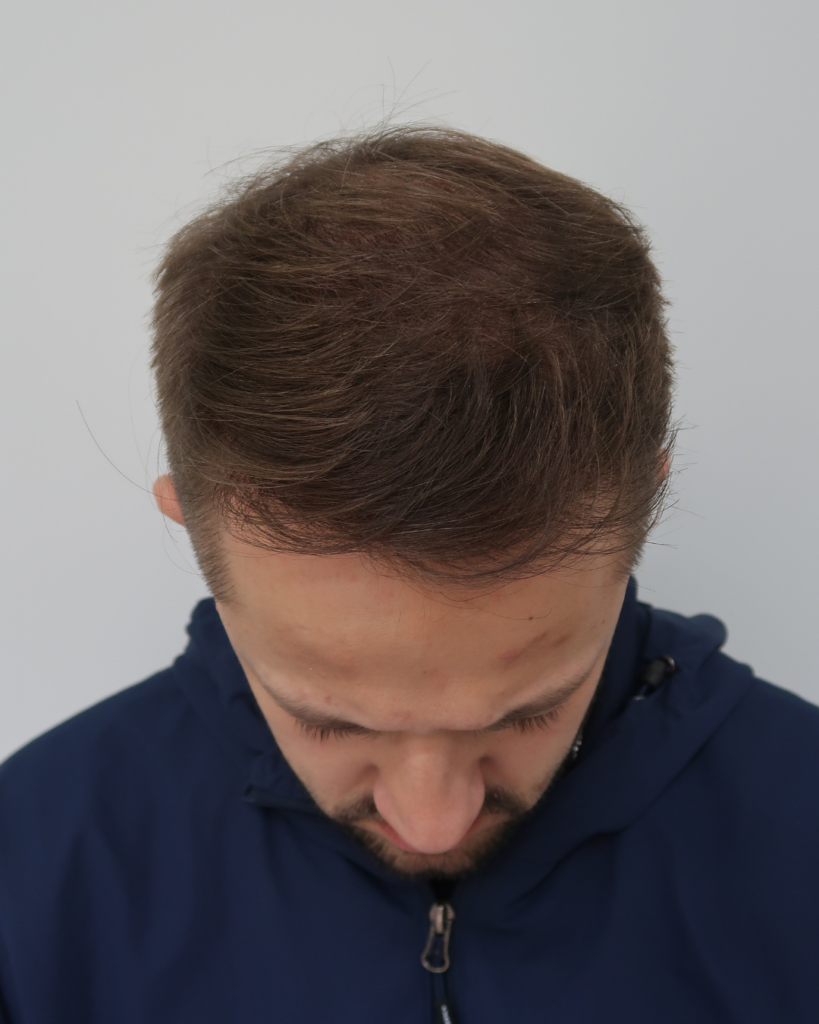
Beard FUE · Male
953 grafts · full beard restoration
Sparse facial hair with patchy growth across the cheek, sideburn, and chin areas. 953 grafts placed using FUE with 0.85 mm punches and natural facial-hair angle design. Dense, even beard achieved at 6 to 12 months.
Full Gallery
Browse every beard and BHT case we have published
Filter by technique, graft count, gender, and timeline. Every patient documented with consent and multi-timepoint photos.
- Multi-timepoint photos (before → final)
- Filter by technique, gender, graft count
- Documented patient consent on every case
- Beard, BHT, scar repair, and corrective cases
FAQ
Frequently asked questions about beard and body hair transplant
How many grafts are needed for a full beard transplant?
A full beard transplant typically requires 2,000 to 4,000 grafts depending on the desired density, coverage area, and your natural facial hair pattern. Partial enhancements like filling patches or adding density to specific areas may require 500 to 1,500 grafts. Dr. Sergio evaluates your facial structure during the consultation.
Where do the grafts come from for a beard transplant?
Can body hair be used for scalp hair transplant?
Does beard hair extraction leave scars?
Can a beard transplant repair facial scars?
How long until beard transplant results are visible?
What is the recovery time for beard or body hair transplant?
Related Techniques
Other procedures we offer
FUE Hair Transplant
Standard FUE for scalp restoration, 3,500 to 4,500 grafts per day with DHI.
Long Hair FUE
Same-day result preview, no shaving, ideal for discreet recovery.
Eyebrow Transplant
Single-hair grafts placed at natural flat angles for permanent brow restoration.
Female Hair Transplant
Specialized protocols for female pattern hair loss.
Start Your Journey
Your Consultation Begins Online
Upload your photos, share your goals, and receive a personalized treatment plan from Dr. Sergio and Dra. Alessandra before you travel. Your first step is a video consultation from wherever you are.
+55 38 98401-1015
contact@hairtransplant-brazil.com
Location
Rua Nunes Machado, 472, Sala 2 · Centro, Curitiba, PR CEP 80250-000