Medically reviewed by Dr. Sergio Camara Lopes (plastic surgeon), October 2026.
In this article
- What FUE is
- What is a DHI hair transplant?
- Why the labels confuse patients
- FUE vs DHI at a glance
- What the evidence says about implanters
- What the evidence does not show
- What actually decides your result
- Questions to ask before you choose a clinic
- How we do it at Camara Lopes Clinic
- Frequently asked questions
- Sources
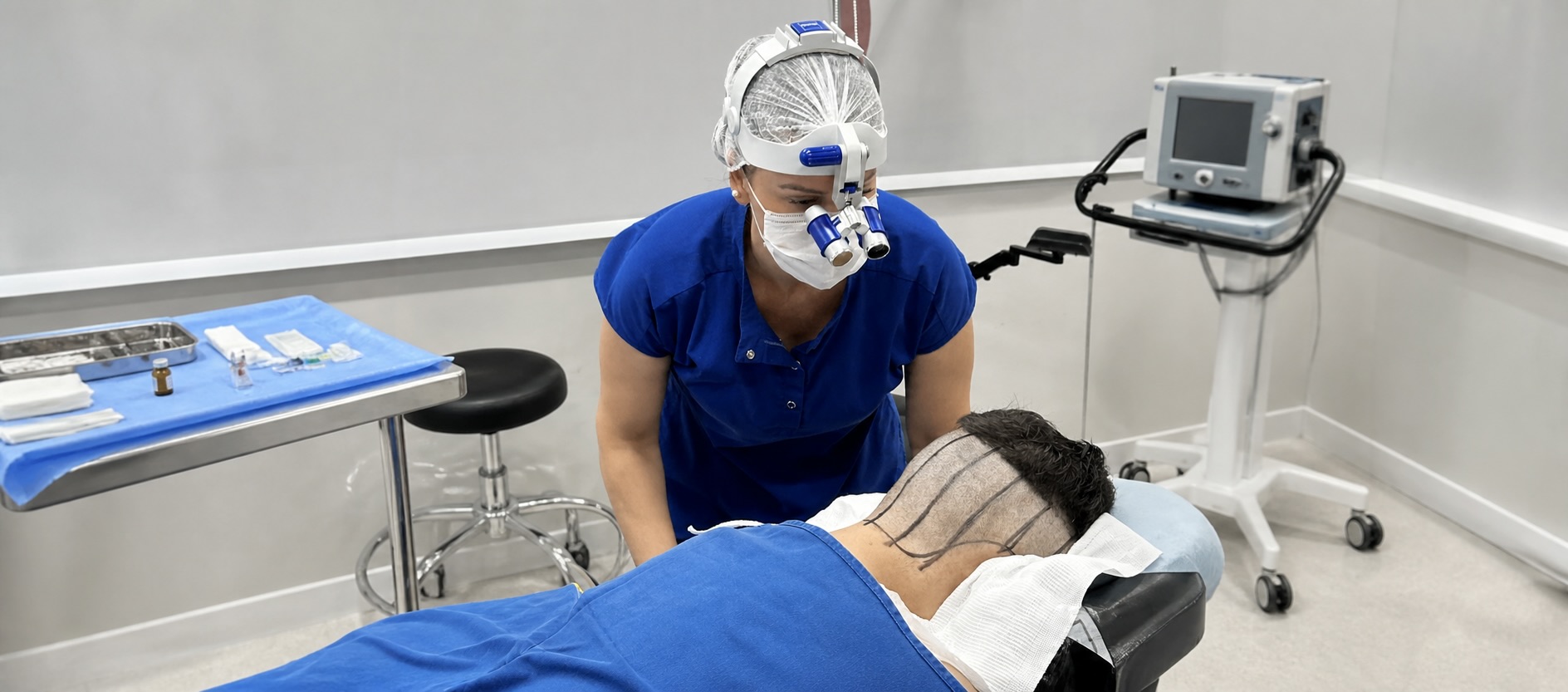
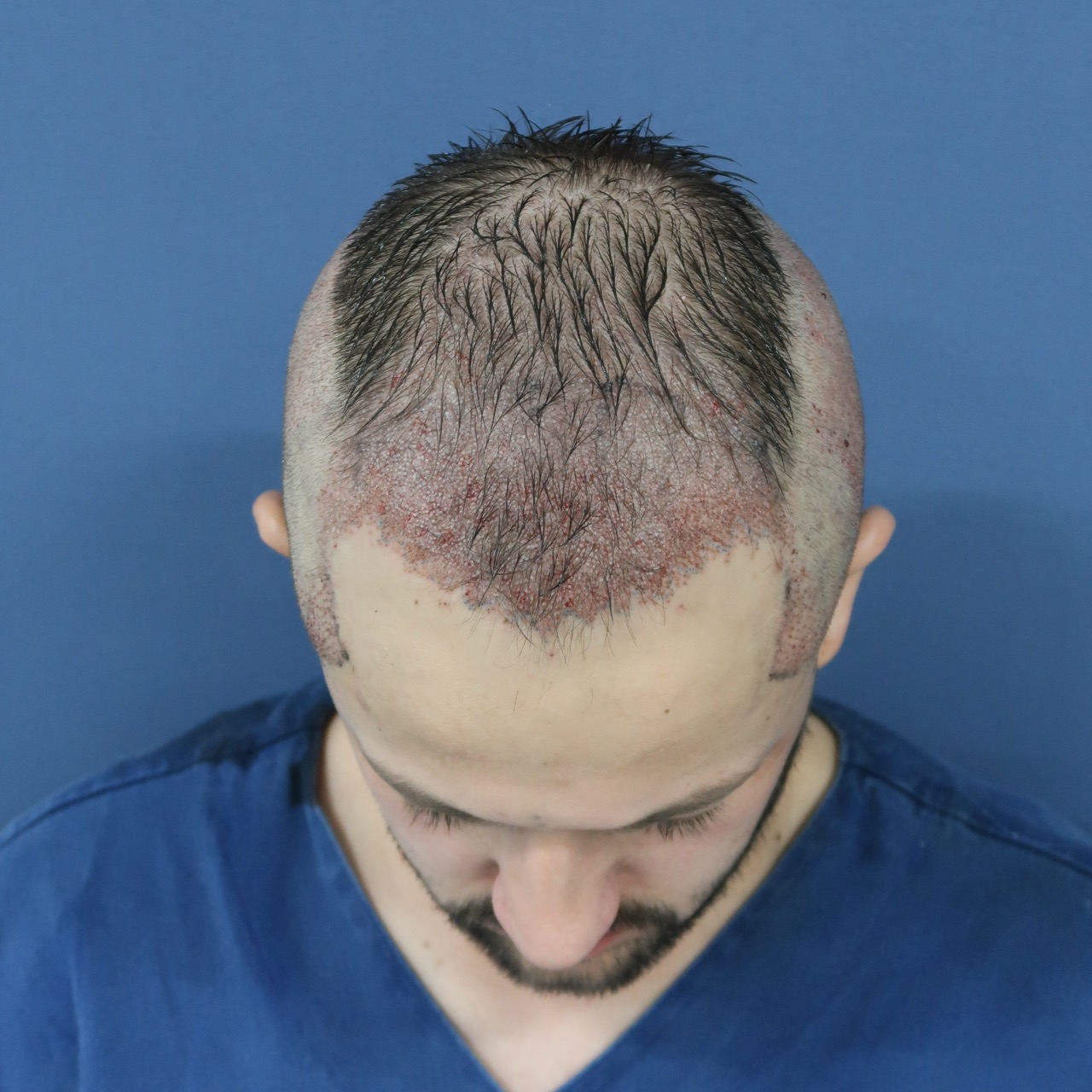
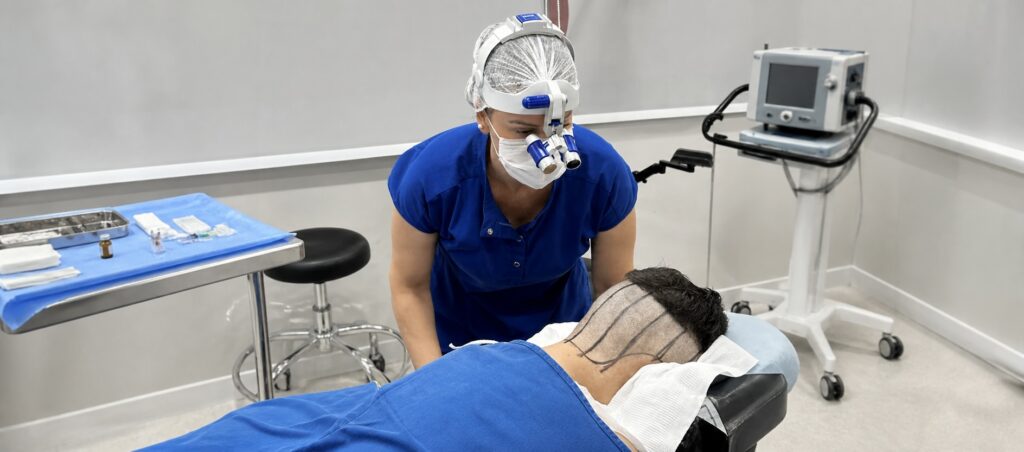
DHI and FUE are usually sold as two competing techniques, but they describe different steps of the same operation. FUE (follicular unit excision) is a way of removing grafts from the donor area one by one. DHI (direct hair implantation) is a way of putting those grafts into the thinning area with a pen-shaped tool called an implanter, instead of with fine forceps. Implanters became popular together with FUE [1], so a procedure sold as DHI normally uses FUE to remove the grafts. In our search of the medical literature we found no controlled study showing that one placement method gives better results. In our view, the planning and the team matter more, above all how carefully they use the donor area.
Comparing two offers that use different labels? Send us your photos and the proposals you have, and we will explain what each one actually involves.
What FUE is
FUE is a harvesting method. The surgeon uses a punch smaller than a millimetre to free individual follicular units, the natural groups of one to four hairs, from the back and sides of the scalp, and then lifts them out [5]. The term “follicular unit extraction” was coined in 2002. In 2017 a nomenclature committee of the International Society of Hair Restoration Surgery (ISHRS) recommended “follicular unit excision”, because the step involves an incision made by a physician as well as the extraction [5].
FUE and strip harvesting (FUT, where a strip of skin is removed and divided into grafts) are both considered state-of-the-art donor techniques [4]. FUE avoids a linear scar, but it is not scarless: each punch leaves a tiny round mark, and one hair surgeon describes “scarless surgery” as a false marketing claim [12]. FUE is also demanding to perform well. It has a long learning curve, and the rate at which follicles are cut during removal (transection) depends heavily on experience and instruments [5][6].
What is a DHI hair transplant?
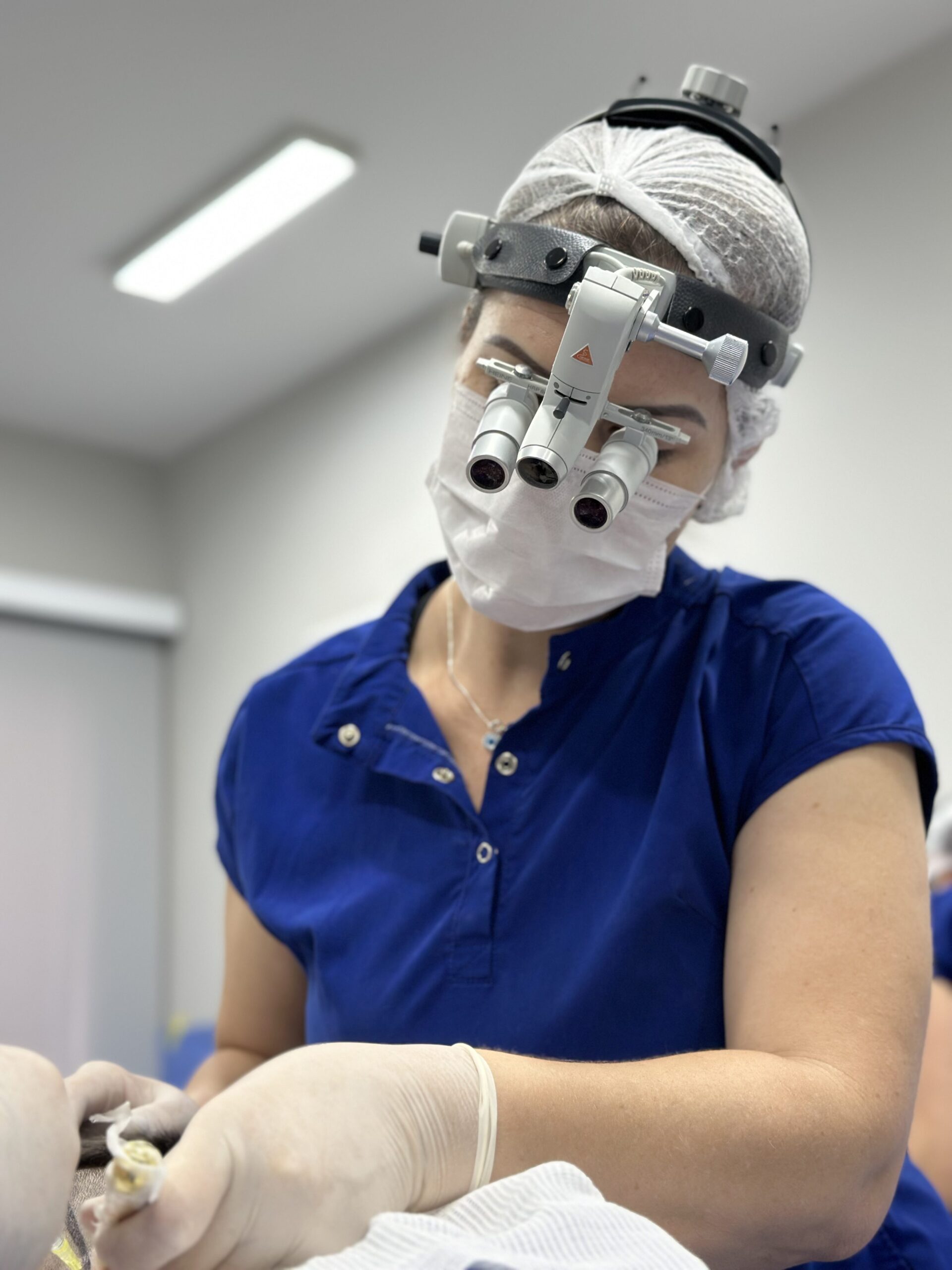
For decades, grafts were placed into the recipient area with forceps. In 1992 Dr. Choi introduced the implanter, a hollow needle in a pen-shaped handle that makes the opening and places the graft in one movement [1]. “DHI” is the name commonly used for this approach today, both as a generic term and as a brand.
Implanters became popular in the West as FUE spread. FUE grafts are similar in size, which suits a loaded pen, and placement can be shared among trained team members [1]. Related approaches also exist: the team can create the openings first and then use implanters to place grafts into these premade sites [8], or it can place each graft as soon as it is harvested to shorten the time out of the body [7]. Implanters were in use before FUE was described [1], but in current practice the grafts for implanter placement usually come from FUE.
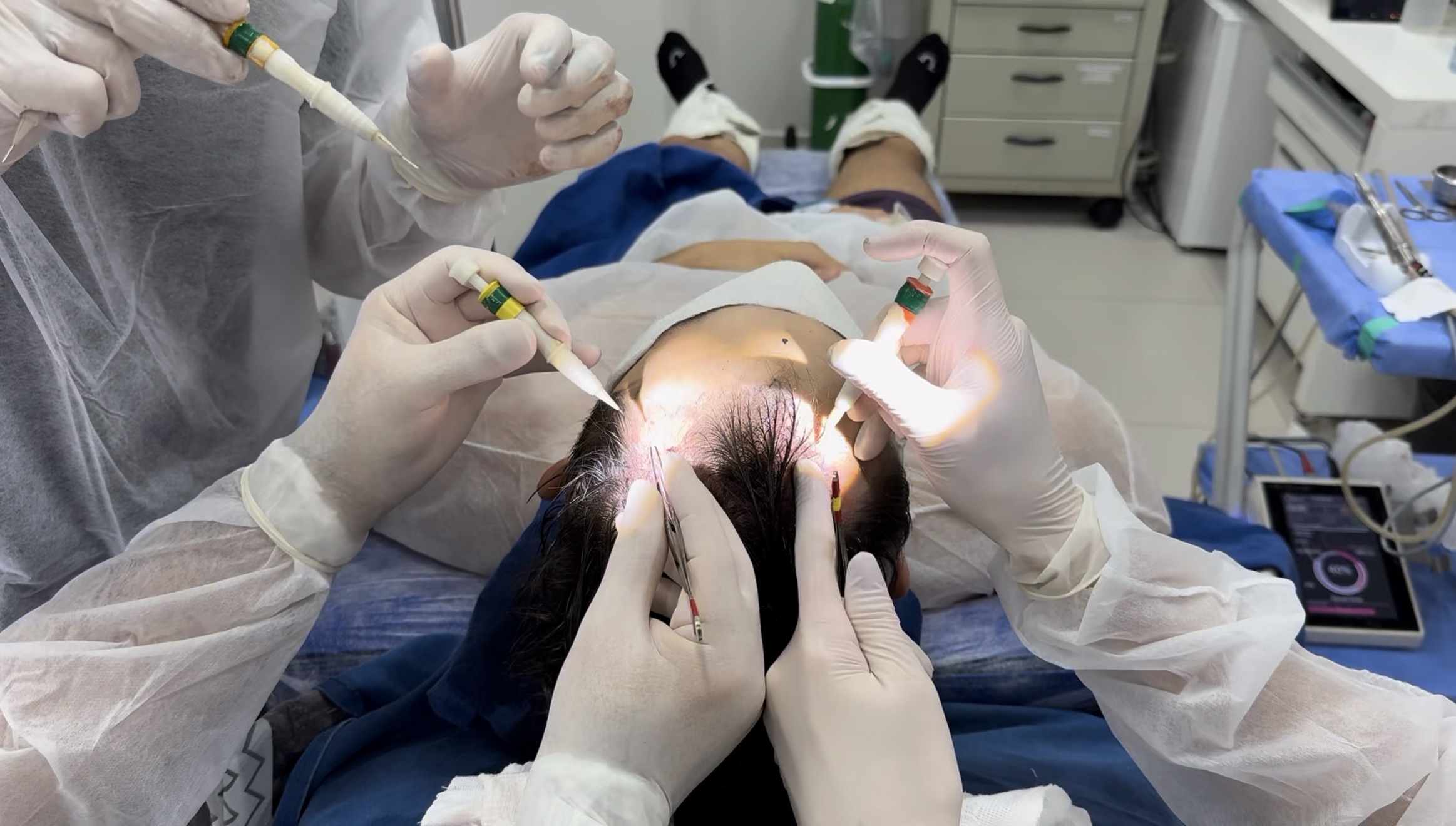
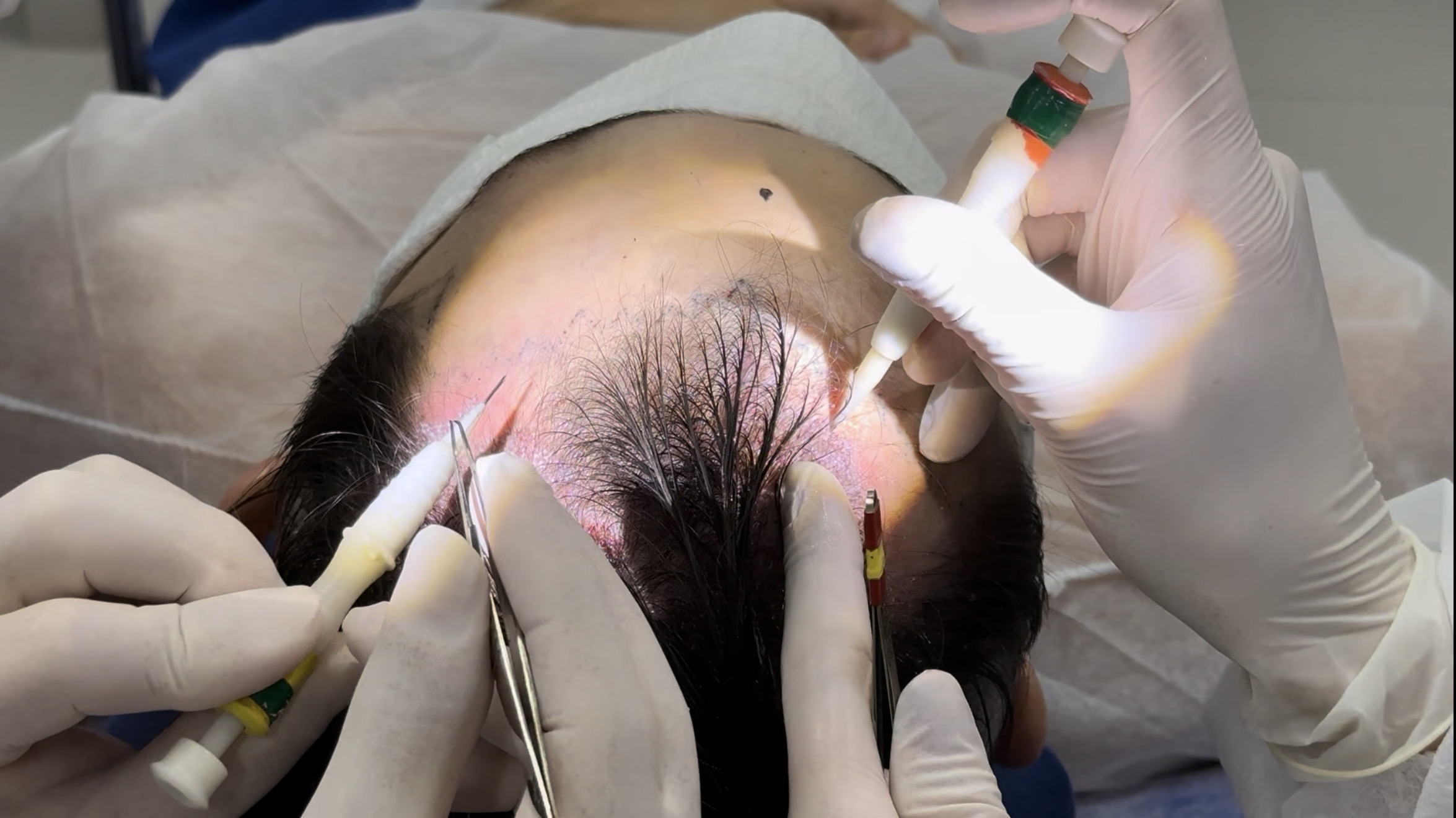
Why the labels confuse patients
Clinics name their packages after whatever sounds most modern, and the same procedure can appear as “FUE”, “DHI”, “sapphire FUE” or “no-shave DHI”. A 2026 review of the terms used for unshaven FUE in publications and advertising describes inconsistent labels as a source of confusion for patients and clinicians that undermines informed consent [13]. The same authors propose that “shaven” or “unshaven” should describe how the donor area is harvested, regardless of whether the recipient area is shaved [13].
In practice, a quote that says “DHI” tells you which tool will most likely be used to place the grafts. It does not tell you who performs each step, how many grafts the donor area can safely give, or how the hairline will be designed.
FUE vs DHI at a glance
| FUE | DHI (implanter placement) | |
|---|---|---|
| Step of the operation | Removing grafts from the donor area | Placing grafts in the recipient area |
| Main tool | Small punch, manual or motorised | Implanter pen with a hollow needle |
| Alternative for the same step | Strip harvesting (FUT) | Forceps placement into premade sites |
| Used together? | Yes, DHI usually follows FUE harvesting | Yes, the grafts usually come from FUE |
| Leaves donor scars? | Small round scars | Depends on the harvest (FUE), not on the pen |
| Requires shaving? | Depends on the harvesting technique | Not decided by the placement tool |
What the evidence says about implanters
Graft survival depends on a few fundamentals: keeping grafts hydrated and cool, handling them gently, and limiting how long they spend outside the body [10]. The argument for implanters rests on these fundamentals. Fewer touches with forceps and a shorter time out of the body should, in principle, protect the grafts [7][8].
The clinical data behind that argument is thin. None of the studies we found compared implanters with forceps:
- In 29 patients whose grafts were implanted into premade sites immediately after harvesting (the abstract does not describe an implanter pen), the authors rated 27 results as good and 2 as poor, judged from photographs [7].
- In 104 patients treated with implanters in premade sites, hair growth became visible after two to five months, and the authors themselves note that regrowth was not measured objectively [8].
- In a small Korean study from 2001 with 11 patients, about half of the transplanted hairs fell out in the first month (the normal shedding phase), and about 92% of hairs were present at six months [9].
A 2024 review of placement techniques concludes that the choice depends on the surgeon’s adaptation and the trade-offs of each instrument, and that forceps allow safe placement in well-trained hands [1].
Implanters also have their own technical problems. A 2026 theoretical analysis looks at “graft popping”, where a graft is pushed back out of its site, and applies its model to two high-risk areas, the shallow angles at the hairline and the swirl at the crown [14]. It is a mechanical model without patient data that offers hypotheses rather than clinical recommendations, and its author holds patents in this field [14].
What the evidence does not show
Based on the sources reviewed for this article, the following claims are not supported:
- That DHI gives higher graft survival or density than FUE with forceps. We found no controlled or split-scalp comparison.
- That DHI is scarless. The grafts are usually harvested by FUE, and FUE leaves small scars [12].
- That DHI means you do not need to shave. Whether the donor area is shaved depends on the harvesting technique, which is also how a 2026 terminology proposal classifies “shaven” and “unshaven” FUE [13]; long-hair and unshaven FUE are separate approaches, explained on our no-shave FUE and long-hair FUE pages.
- That DHI heals faster or hurts less. We found no comparative data.
If a clinic presents one of these as a fact, ask for the study.
What actually decides your result
The placement tool is one variable among many. Reviews of FUE and its complications describe other factors that influence the result [2][4][11], and in our view they deserve more attention than the tool:
- Diagnosis and candidacy: not every type of hair loss is suitable for surgery [3]. Our guide to male pattern baldness explains how the stage and stability of the loss shape the plan, and the article on hair loss causes covers conditions where a transplant is the wrong tool.
- Donor management: the donor area is limited. How many grafts can be taken, and from where, determines what is possible now and later. Read why the donor area matters most.
- Who performs each step: harvesting quality depends on skill and experience [5][6], and implanters make it easier to delegate placement [1]. Ask who does what.
- Graft handling and timing: hydration, temperature and time out of the body apply whichever tool is used [10][11].
- Design and long-term planning: hairline design and medical treatment of the remaining native hair have improved results [4]. A technique label does not replace a plan, as explained in why FUE alone is not enough.
Questions to ask before you choose a clinic
- Which technique will be used to harvest the grafts, and which to place them?
- Which steps does the doctor perform personally, and which does the team perform?
- How many grafts do you plan to take, and how much donor reserve will remain?
- Will the donor area or the recipient area be shaved?
- What will the hairline look like in ten years if my hair loss continues?
- Can you show results for patients with hair loss similar to mine?
More on this in our guide to choosing a hair transplant clinic.
How we do it at Camara Lopes Clinic
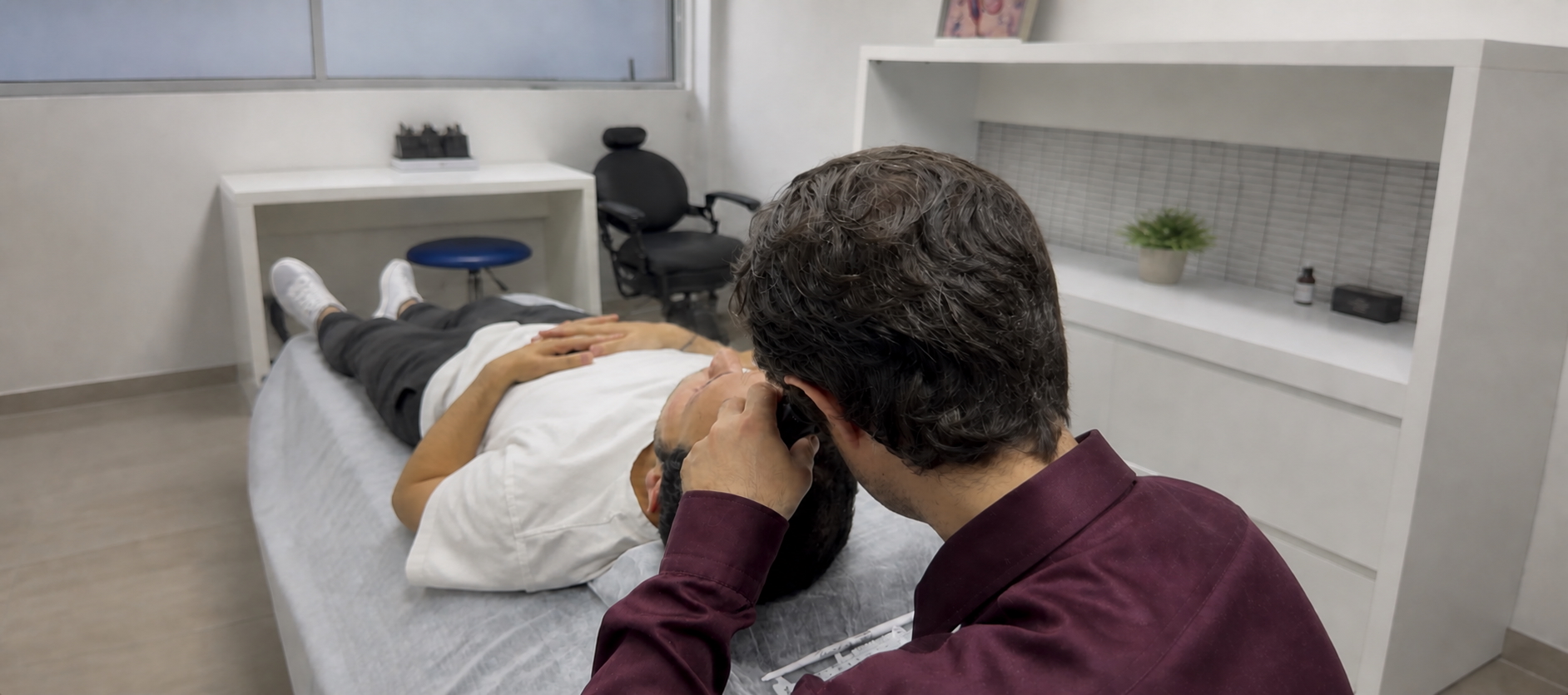
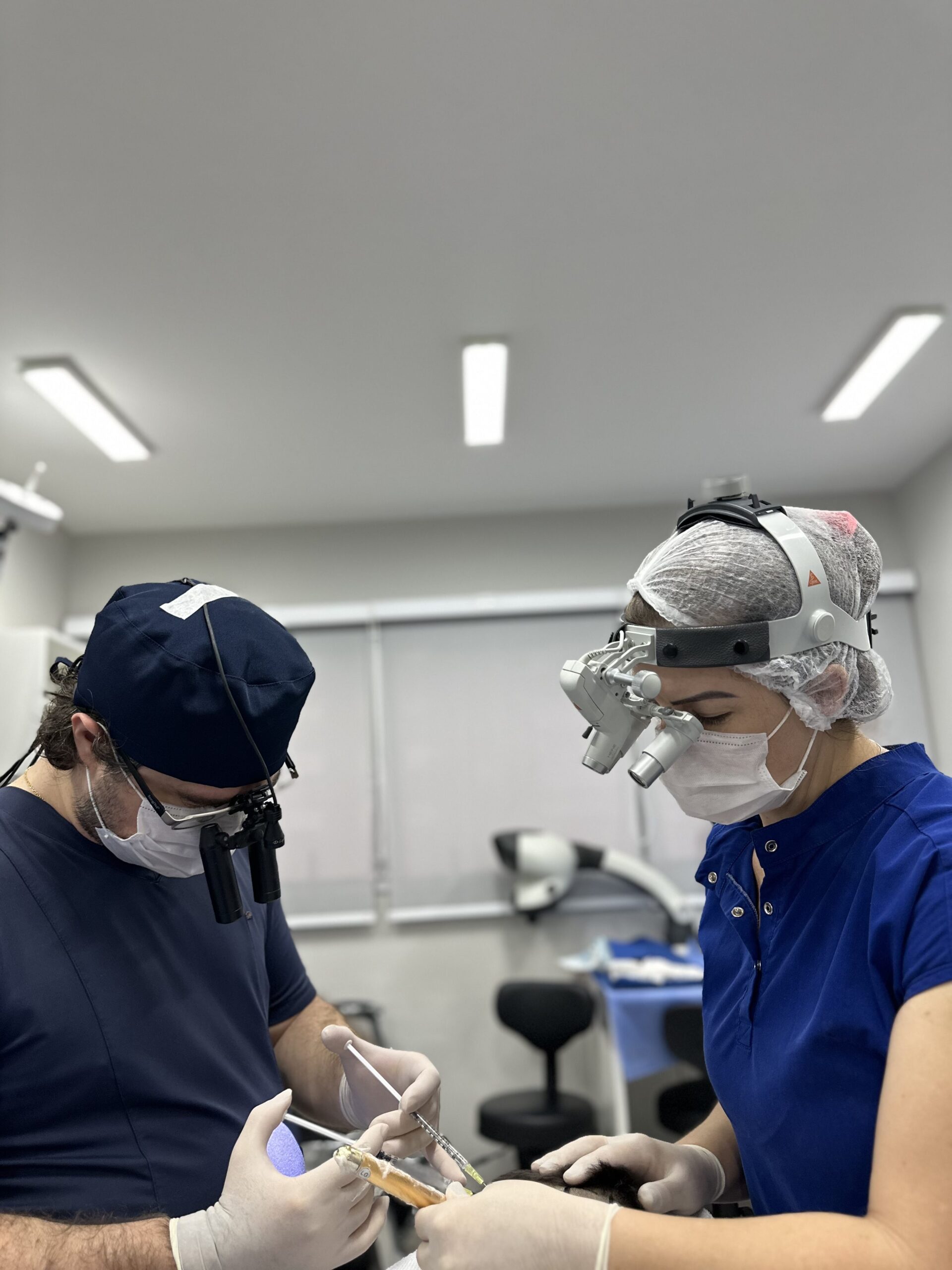
At our clinic in Curitiba, grafts are harvested by FUE and placed with implanter pens, the approach usually sold as DHI. Both of our doctors, a plastic surgeon and a dermatologist, take part in the evaluation before surgery and personally review each quote. The details of the procedure are on our FUE hair transplant page, and you can meet the doctors or look at documented results.
The price is not set by the name of the technique. Many cases at our clinic are estimated at around USD 2.00 to 2.50 per graft, and the final quote depends on the number of grafts and the complexity of the case. See what a hair transplant costs for how the estimate is built.
Not sure which approach fits your hair loss? Send your photos for an initial medical evaluation, and the clinic will explain the options for your case.
Frequently asked questions
Is DHI better than FUE?
The question compares two different steps. FUE removes the grafts, and DHI is one way to place them [1][5]. In our search we found no controlled study showing that implanter placement gives better survival or density than forceps placement, and a 2024 review notes that forceps allow safe placement in well-trained hands [1].
Is DHI the same as FUE?
No. FUE is the harvesting method, and DHI refers to placing grafts with an implanter pen [1][5]. A transplant can combine both, which is what our clinic does.
Does DHI leave scars?
The donor scars come from the harvesting, not from the pen. With FUE they are small round marks rather than a line, but FUE is not scarless [12].
Do I have to shave my head for DHI?
Whether the donor area is shaved depends on how it is harvested, not on the placement tool [13]. Unshaven and long-hair FUE exist, each with its own indications, and they are not suitable for every case [13].
Is DHI better for the hairline?
Implanters can be used at the hairline. A theoretical model suggests that the shallow angles there may make graft popping more likely [14], and forceps allow safe placement in well-trained hands [1]. In our view, the design of the hairline and the skill of the team matter more than the tool.
Can I choose DHI at Camara Lopes Clinic?
Our standard approach combines FUE harvesting with implanter placement. Whether it suits your case is decided in the evaluation.
Sources
- Speranzini M, Souza SEG. Advancements in Graft Placement Techniques. Facial Plast Surg, 2024. PMID 37879353. DOI 10.1055/a-2198-2782. https://pubmed.ncbi.nlm.nih.gov/37879353/
- Jimenez F, Vogel JE, Avram M. CME article Part II. Hair transplantation: Surgical technique. J Am Acad Dermatol, 2021. PMID 33915242. DOI 10.1016/j.jaad.2021.04.063. https://pubmed.ncbi.nlm.nih.gov/33915242/
- Jimenez F, Alam M, Vogel JE, Avram M. Hair transplantation: Basic overview. J Am Acad Dermatol, 2021. PMID 33905785. DOI 10.1016/j.jaad.2021.03.124. https://pubmed.ncbi.nlm.nih.gov/33905785/
- Queen D, Avram MR. Hair Transplantation: State of the Art. Dermatol Surg, 2025. PMID 40354670. DOI 10.1097/DSS.0000000000004675. https://pubmed.ncbi.nlm.nih.gov/40354670/
- Garg AK, Garg S. Donor Harvesting: Follicular Unit Excision. J Cutan Aesthet Surg, 2018. PMID 30886473. DOI 10.4103/JCAS.JCAS_123_18. https://pubmed.ncbi.nlm.nih.gov/30886473/
- Epstein GK, Epstein J, Nikolic J. Follicular Unit Excision: Current Practice and Future Developments. Facial Plast Surg Clin North Am, 2020. PMID 32312503. DOI 10.1016/j.fsc.2020.01.006. https://pubmed.ncbi.nlm.nih.gov/32312503/
- Sethi P, Bansal A. Direct hair transplantation: a modified follicular unit extraction technique. J Cutan Aesthet Surg, 2013. PMID 24023433. DOI 10.4103/0974-2077.112672. https://pubmed.ncbi.nlm.nih.gov/24023433/
- Bansal A, Sethi P, Kumar A, Sahoo AK, Das P. Use of Implanters in Premade Recipient Sites for Hair Transplantation. J Cutan Aesthet Surg, 2019. PMID 32001973. DOI 10.4103/JCAS.JCAS_33_19. https://pubmed.ncbi.nlm.nih.gov/32001973/
- Lee SJ, et al. Evaluation of survival rate after follicular unit transplantation using the KNU implanter. Dermatol Surg, 2001. PMID 11493294. DOI 10.1046/j.1524-4725.2001.01029.x. https://pubmed.ncbi.nlm.nih.gov/11493294/
- Parsley WM, Perez-Meza D. Review of factors affecting the growth and survival of follicular grafts. J Cutan Aesthet Surg, 2010. PMID 21031063. DOI 10.4103/0974-2077.69014. https://pubmed.ncbi.nlm.nih.gov/21031063/
- Romera de Blas C, Vega Díez D, Ricart Vayá JM, Gómez Zubiaur A. Complications in follicular unit excision hair transplantation: current evidence and practical approaches. Front Med, 2026. PMID 41709896. DOI 10.3389/fmed.2026.1750989. https://pubmed.ncbi.nlm.nih.gov/41709896/
- Rose PT. Ethical Considerations in Follicular Unit Excision Surgical Procedures. Facial Plast Surg, 2024. PMID 37944997. DOI 10.1055/a-2207-3413. https://pubmed.ncbi.nlm.nih.gov/37944997/
- Jimenez F, Gupta AK, Shapiro R, Talukder M. Unshaven Follicular Unit Excision: Critical Analysis of Current Nomenclature and Proposal for Standardized Terminology. Dermatol Surg, 2026. PMID 41805884. DOI 10.1097/DSS.0000000000005049. https://pubmed.ncbi.nlm.nih.gov/41805884/
- Park JH. A First-Principles Biomechanical Analysis of Graft Popping in Sharp Implanter Hair Transplantation. Clin Cosmet Investig Dermatol, 2026. PMID 42781563. DOI 10.2147/CCID.S634017. https://pubmed.ncbi.nlm.nih.gov/42781563/
Medical note: this article is general information and does not replace a medical consultation. Treatment decisions are made with a doctor after an examination. See our medical disclaimer.